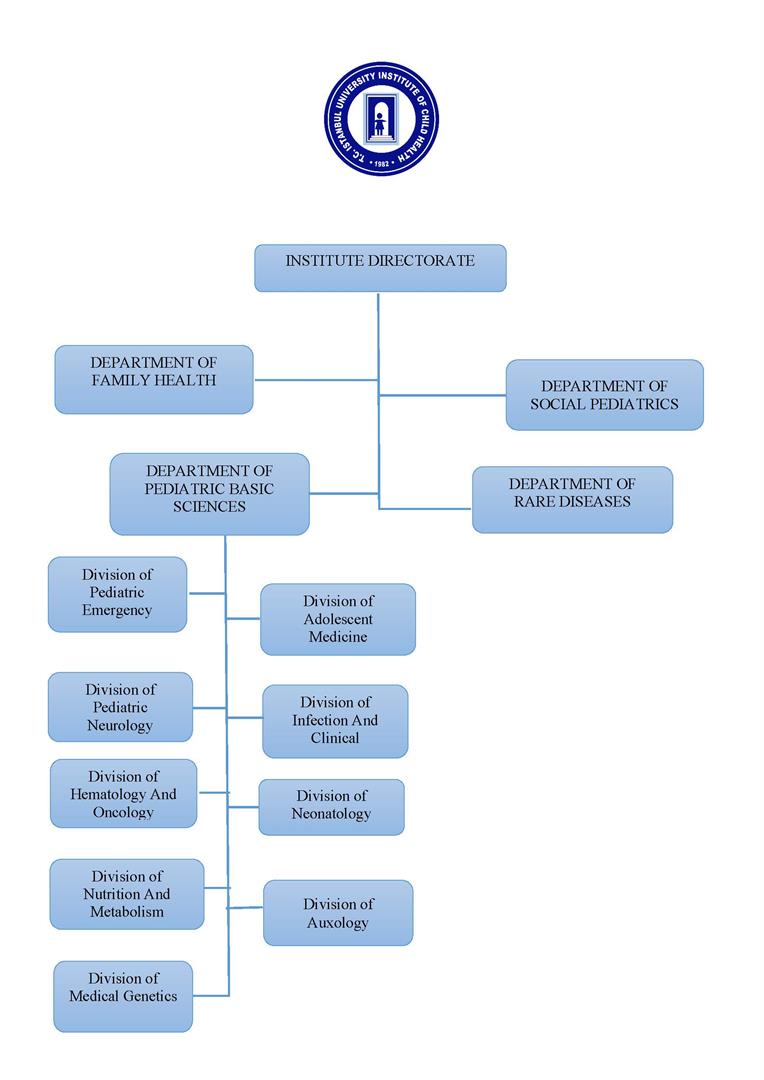

DEPARTMENT OF FAMILY HEALTH (06.01.1983 / 208)
The Department of Family Health has been organizing courses and 'workshops' for the in-service training of health personnel working in maternal and child health services, especially in communication, approach to problems, health education and training techniques since 1985. In 1994, The Breastfeeding Counseling:
A Training Program was launched by World Health Organization (WHO) and UNICEF. The Turkish Ministry of Health helped the program by providing the translation of the training materials. Certificate programs and similar training activities have been carried out as the activities of the Women and Child Health Education and Research Unit team since 1994. Women and Child Health Education and Research Unit; It was established in 1994 by the Family Health Department of the Child Health Institute and the Istanbul Medical Faculty for a period of three years, within the scope of the project of the Human Resource Development Foundation supported by the European Union. In the unit, information, mother and father support programs and consultancy services were provided to families on contraception methods, women's health, baby care and breastfeeding, and in-service activities were continued for the development of professional staff. The research work of the unit is about sexual health, child health and related issues. In the Women and Child Health Education Unit, more than 15 000 family applications were continuously served between 1994-2002. More than 500 faculty members including doctors, pharmacists, psychologists, nurses and educators, some of them from the Turkic Republics, benefited from the many training programs carried out in cooperation with various institutions.
Division of Medical Genetics (06.01.1983 / 208)
Clinical genetics, genetic counseling, cytogenetic and molecular genetic studies have been performed on more than 30 000 patients in the Department of Medical Genetics. In addition to routine cytogenetic banding techniques, molecular cytogenetic (FISH) studies are also applied in our cytogenetic laboratory.
Around 27 000 chromosome analyzes were performed, of which approximately 15 000 were postnatal and 12 000 were prenatal.
Division of Nutrition and Metabolism (06.01.1983 / 208)
The Division of Nutrition and Metabolism serves together with the Division of Gastroenterology, Hepatology, and Nutrition, Department of Child Health and Diseases of Istanbul University.
Division of Child Neurology (30.09.1987)
The Division of Pediatric Neurology serves together with the Division of Pediatric Neurology, Department of Child Health and Diseases of Istanbul University. The Division carries out the Child Development Neurology Master's Program.
Division of Adolescent Science (22.11.1988 / 25014)
Department of Adolescent was established in 1988 within the Child Health Institute. Adolescent health outpatient service offered by the Department of Growth-Development and Pediatric Endocrinology between 2004-2007, and by the Department of Growth-Development and Pediatric Endocrinology and Social Pediatrics between 2008-2011 within the body of Istanbul Faculty of Medicine, Department of Child Health and Diseases. The Unit of Adolescent Health under the Department of Child Health and Diseases, which was established in 2011, has been serving together with the Department of Adolescent Health. Adolescence period; is a rapid growth, development and maturation process in terms of physical, cognitive and psychosocial aspects, and it is the period in which the transition from childhood to adulthood is achieved. Problems specific to this period are psychiatry, psychology, obstetrics, urology, public health, pediatric health and diseases, internal medicine, orthopedics, sports medicine, dermatology, etc. concerns various medical disciplines. The aim of adolescent health monitoring is to support the healthy development of adolescents, to provide preventive health services and guidance, to identify period-specific problems and to produce solutions with relevant medical disciplines. Adolescent health care is an investment in both adolescents, their adulthood and future generations due to its effects. The Adolescent Department, together with the Adolescent Health Unit, provides adolescent-friendly health services. In addition, it has been carried out the Adolescent Health Doctorate Program since the fall semester of the 2019-2020 academic year in the Child Health Institute. The aim of the doctoral program is to provide quality health services in the field of adolescent health, to train medical students, physicians and health personnel, to communicate well with various medical disciplines for the improvement of adolescent health, to plan and conduct scientific researches and to share the results, to cooperate nationally and internationally, to provide courses. It is to train physicians who can support the development of adolescent health and contribute to the development of health policies by organizing scientific meetings such as seminars, congresses, etc., and thus to ensure the development of adolescent medicine in our country by increasing the number of physicians equipped in this field.
Division of Oxology (09.04.1991 / 6226)
The Division of Oxology serves together with the Division of Pediatric Endocrine and Growth-Development, Department of Child Health and Diseases of Istanbul University.
Division of Neonatology (09.04.1991 / 6226)
The Division of Neonatology serves together with the Division of Neonatology, Department of Child Health and Diseases of Istanbul University.
Division of Infection and Clinical Microbiology (09.04.1991 / 6226)
The Division of Infection and Clinical Microbiology serves together with the Division of Pediatric Infection, Department of Child Health and Diseases of Istanbul University.
Division of Hematology – Oncology (09.04.1991 / 6226)
The Division of Hematology - Oncology serves together with the Division of Pediatric Hematology – Oncology, Department of Child Health and Diseases of Istanbul University.
Division of Pediatric Emergency (31.03.1992 / 8210)
The Division of Pediatric Emergency serves together with the Division of Pediatric Emergency, Department of Child Health and Diseases of Istanbul University.
DEPARTMENT OF SOCIAL PEDIATRICS (06.01.1983 / 208)
The Department of Social Pediatrics examines the effects of social, environmental and domestic factors on child health and aims to apply pediatrics in the context of society, environment, school and family with a universal, holistic and multidisciplinary perspective, considers these effects, and the fundamental environmental determinants in the evaluation of each child's health problems. Social Pediatrics integrates the physical, mental and social dimensions of child health and development in health promotion, protection and quality of life. It aims to minimize the effects of social inequalities on child health. Ensuring that children reach their optimal growth and developmental potential, early diagnosis, immunization are the main study areas of Social Pediatrics.
The Department of Social Pediatrics has carried out Social Pediatrics PhD Program since 1993. The primary aims of the department are to carry out postgraduate research on protecting and improving child health, to present the results of these researches to the community and relevant institutions and to provide consultancy in this area. The topics included in the graduate education programs of Social Pediatrics are summarized as follows:
DEPARTMENT OF RARE DÍSEASES (17.02.2020 / 39649)
The primary aims of the Department of Rare Diseases are to establish an interdisciplinary academic environment in the field of Rare Diseases always with a special priority on the ethical values in children, and to promote international collaborations in Rare Diseases with programs on education and researches about the child health. In the context of Rare Diseases, collaborating with the technology and research centers of the university, and improving early diagnosis and treatment through the international projects and researches are among the other objectives of the department. It is very important to create an environment for clinical and basic sciences to meet under the same roof in order to develop new methods in the field of Rare Diseases and to become an internationally recognized reference center in the field of Rare Diseases.